
How to make a balcony feel like a garden
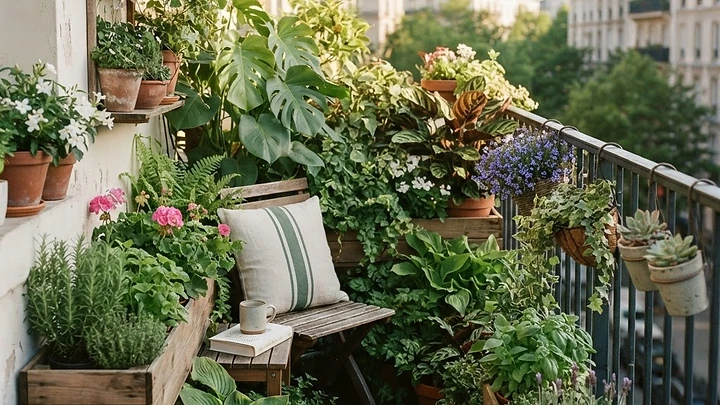
Start with what you have
A balcony garden does not begin with plants. It begins with understanding your space. How much direct sunlight does your balcony receive through the day? Is it open to the sky or partially shaded by an overhang?
Spend a day watching the light move across your balcony. Note where the sun falls in the morning, at noon, and in the late afternoon. This single observation will tell you more about which plants will thrive than any guidebook ever could.
Measure the space, too. Not just the floor area, but the height you have available. Balcony gardens live vertically as much as horizontally, and the upward dimension is where the most transformation happens.
Choose plants that love your light
The most common reason a balcony garden fails is not water or soil. It is light. A plant placed in the wrong light will struggle no matter how much care it receives.
For balconies with four or more hours of direct sun, choose heat-tolerant plants that thrive in Indian climates. Bougainvillea brings colour and handles reflected heat beautifully. Jasmine gives fragrance through the evening.
For balconies with partial or filtered light, ferns, peace lilies, and philodendrons create a softer, greener feel. These plants prefer indirect light and will scorch in harsh afternoon sun.
Add height to create depth
A balcony garden that sits entirely at floor level will always feel flat, no matter how many plants you add. The secret to a balcony that feels like a garden is layering.
Start with tall planters at the back or corners. Add a trellis against a wall and let a climbing plant fill it. Hang planters from the railing or ceiling. Place a low, wide planter at the front.
Vertical gardening is especially powerful on small balconies. A living wall, even a small one, multiplies your planting area without using any floor space.
Create a place to sit
A balcony garden is not a display. It is a place to be. If there is nowhere to sit, you will admire it from inside and never actually use it. The moment you add a chair, the balcony becomes a room.
You do not need much. A single chair, a small side table for a cup of tea, and a plant within arm's reach is enough. Position the seat where you can see the most greenery.
Care that keeps it alive
Balcony plants live in pots, which means they depend on you completely for water. The soil in a pot dries out faster than garden soil, and in Hyderabad's heat, a small pot can need water every day during summer.
Feed your plants during the growing season. A slow-release organic fertiliser every few months keeps the soil alive and the plants steady. Prune regularly to encourage bushier growth.
Most of all, pay attention. The plants that thrive on a balcony are the ones you notice. When you walk past and glance at them each day, you will catch problems before they spread.
Keep exploring
Frequently asked questions
Stay close to nature
Letters on living with nature, occasionally in your inbox.


Come closer
Let us bring nature closer to your space.
Tell us about your home, your terrace, your office, and how you would like it to feel.