
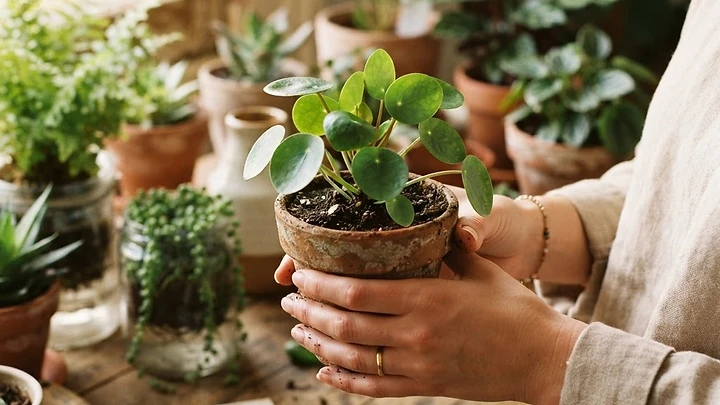
Knowing when to repot
A plant in a pot will eventually outgrow it. The roots, with nowhere to go, circle the inside of the pot, becoming rootbound. The plant dries out faster because there is less soil to hold water. Growth slows, and the plant may stop growing entirely despite regular care. These are signs that it is time to repot.
Other signs include roots growing through the drainage holes, roots visible on the soil surface, and the plant becoming top-heavy and prone to tipping. Most indoor plants need repotting every one to two years. Fast-growing plants may need it more often. Slow-growing plants like succulents may need it less. When in doubt, gently lift the plant from its pot and check the roots. If they are circling densely, it is time.
Choosing the right pot
When repotting, choose a pot that is one size larger than the current one. Going up one size, about 2 to 5 cm wider in diameter, gives the roots room to grow without leaving too much empty soil. A pot that is too large holds excess moisture in the unused soil, which can lead to root rot.
Ensure the pot has drainage holes. This is non-negotiable. A pot without drainage traps water, and the plant will eventually rot. Terracotta pots are excellent because they breathe, allowing air to reach the roots. Plastic and ceramic pots work too, as long as they have drainage. Clean the pot before using it, especially if it previously held a plant, to prevent transferring pests or diseases.
The repotting process
Water the plant a few hours before repotting. This reduces stress and makes the root ball easier to handle. Gently remove the plant from its old pot. If it is stuck, tap the sides or run a knife around the edge. Do not pull the stem, as this can damage the plant.
Tease the roots gently. If they are circling densely, loosen them with your fingers and trim any that are dead or excessively long. Place a layer of fresh potting soil in the new pot, set the plant on it, and fill around the sides with more soil. The plant should sit at the same depth as before, not deeper. Press the soil gently and water thoroughly. Keep the plant in shade for a few days to let it recover from the transplant shock.
After repotting
After repotting, the plant needs time to adjust. The roots have been disturbed, and they need to re-establish before the plant resumes normal growth. Keep the plant in a sheltered spot with indirect light for a week. Water when the soil surface feels dry, but do not fertilise for at least a month. The fresh soil contains enough nutrients, and fertiliser can burn the new, tender roots.
Within a few weeks, you should see new growth, a sign that the roots have recovered and the plant is thriving in its new home. Repotting is not a frequent task, but it is an important one. A plant in the right pot, with fresh soil and room to grow, will reward you with years of healthy, vigorous growth. It is one of the simplest and most impactful things you can do for your plants.
Keep exploring
Frequently asked questions
Stay close to nature
Letters on living with nature, occasionally in your inbox.


Come closer
Let us bring nature closer to your space.
Tell us about your home, your terrace, your office, and how you would like it to feel.