
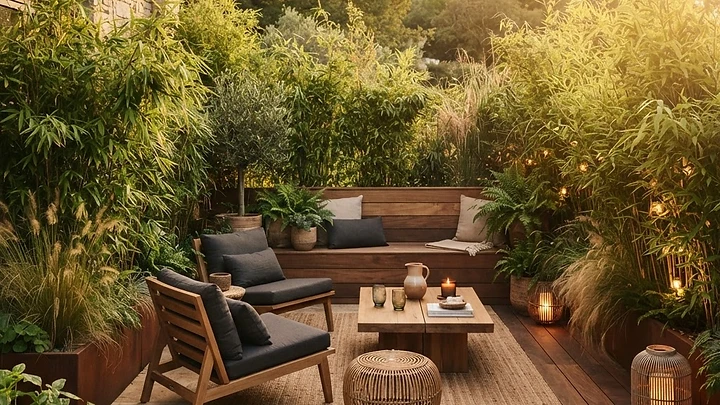
Beyond the visual
Most gardens are designed for the eyes alone. We choose plants for their colour, their form, their visual impact. But a garden is experienced by the whole body, not just the eyes. The smell of jasmine in the evening. The sound of wind through grass. The texture of a leaf between the fingers. When a garden engages all the senses, it becomes a place you do not just look at but inhabit.
A sensory garden is designed with this in mind. Every plant and element is chosen not just for how it looks but for how it smells, feels, sounds, and even tastes. The result is a garden that is more immersive, more therapeutic, and more memorable than one designed for sight alone.
Scent
Scent is the most evocative sense. A single fragrance can transport you to a memory or a place. In a sensory garden, scent should be layered throughout the space. Jasmine and night-blooming jasmine for the evening. Rosemary and basil for the herb garden. Frangipani and champa for the warm months.
Place scented plants where you will encounter them naturally. Beside a path where you brush past them. Near a seat where you pause. By a door you open and close. The scent should be a discovery, not a constant background. When fragrance surprises you, it has the most power.
Touch and texture
Texture in a garden is often overlooked, but it is one of the most direct ways we connect with plants. The soft, silver leaves of lamb's ear. The rough bark of a frangipani tree. The delicate fronds of a fern. The smooth, cool surface of a stone. Each texture invites touch, and touch creates a physical connection to the garden.
Include plants that invite interaction. Ornamental grasses that move when you run your hand through them. Succulents with their firm, sculptural leaves. Moss that is soft and damp in the shade. Place textured plants where people can reach them, not behind a barrier. A garden that can be touched is a garden that is experienced, not just observed.
Sound and taste
Sound in a garden is created by movement. Wind through bamboo. Water over stone. Birds attracted by flowers and fruit. A small water feature adds a constant, gentle sound that masks city noise and creates a sense of calm. Ornamental grasses rustle in the slightest breeze. These sounds make the garden feel alive even when you are sitting still.
Taste is the most intimate sense in a garden. Herbs like basil, mint, and coriander invite you to pick and taste. Cherry tomatoes warm from the sun. A kaffir lime leaf crushed between the fingers. When a garden feeds you, even in small ways, the relationship changes. You are not just an observer. You are a participant.
Keep exploring
Frequently asked questions
Stay close to nature
Letters on living with nature, occasionally in your inbox.



Come closer
Let us bring nature closer to your space.
Tell us about your home, your terrace, your office, and how you would like it to feel.