
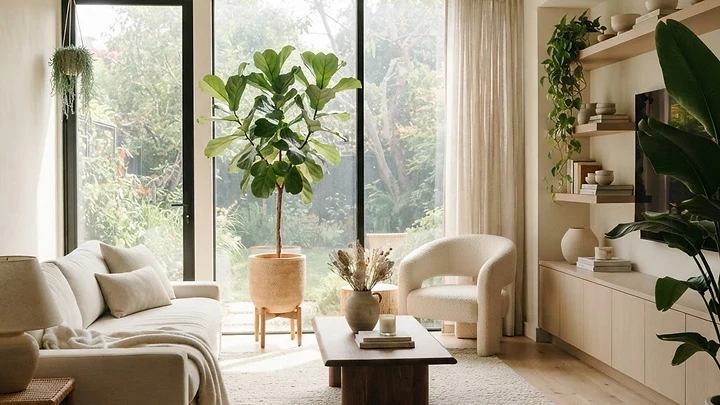
The sense we forget
Interior design is overwhelmingly visual. We choose colours, patterns, and forms, and we judge spaces by how they look. But we experience spaces with all our senses, and touch is one of the most powerful. The feel of a wooden armrest, a stone countertop, a linen cushion. These tactile experiences shape how we feel in a space, often more than we realise.
Natural textures have a quality that synthetic materials cannot replicate. They have variation, imperfection, and a sense of history. A wooden surface has grain. A stone surface has veins. A linen surface has slubs. These variations are not flaws. They are the fingerprints of nature, and they create a richness that the eye reads as organic and the body reads as restful.
Wood: the living material
Wood is the most versatile and most warm natural material. It has grain that tells the story of the tree it came from. It ages, developing a patina that makes it more beautiful over time. It is warm to the touch, unlike stone or metal, which makes it inviting in a way that cold materials are not.
Use wood for surfaces that are touched frequently. Desks, tables, shelving, armrests. Choose woods that age well, like teak, oak, and acacia. Avoid finishes that hide the grain or create a plastic-like surface. An oil finish that lets the wood breathe and develop is better than a thick varnish that seals it in. The goal is to let the wood be wood, not to make it look like something else.
Stone, clay, and earth
Stone brings a cool, solid, grounded quality to a space. A stone countertop, a stone vase, a stone sculpture. Stone has weight and permanence that no other material conveys. It stays cool in the heat, which makes it valuable in Indian climates. And it ages beautifully, developing a soft, worn surface that tells the story of its use.
Clay and terracotta bring a warm, earthy quality. Terracotta pots, ceramic vases, unglazed tiles. These materials have a handmade quality that connects us to the craft of making. They are imperfect, varied, and alive in a way that factory-made materials are not. Use them for planters, vessels, and surfaces where the texture can be seen and felt. The combination of wood, stone, and clay creates a palette of natural textures that is warm, grounded, and deeply restful.
Fabric and the soft touch
Fabric is the texture we touch most directly. Bedding, cushions, curtains, upholstery. The fabrics in a space touch the body, and their quality matters more than any other material. Natural fabrics, linen, cotton, wool, silk, breathe. They regulate temperature and moisture. They feel good against the skin in a way that synthetic fabrics do not.
Linen is the most beautiful natural fabric, with a slubby, organic texture that improves with washing. Cotton is versatile and comfortable. Wool adds warmth and texture. Use these fabrics for bedding, cushions, curtains, and upholstery. Avoid synthetic fabrics that look flat and feel clammy. The fabrics in a space are the closest natural texture to the body, and choosing them well is one of the most impactful design decisions you can make.
Keep exploring
Frequently asked questions
Stay close to nature
Letters on living with nature, occasionally in your inbox.



Come closer
Let us bring nature closer to your space.
Tell us about your home, your terrace, your office, and how you would like it to feel.