
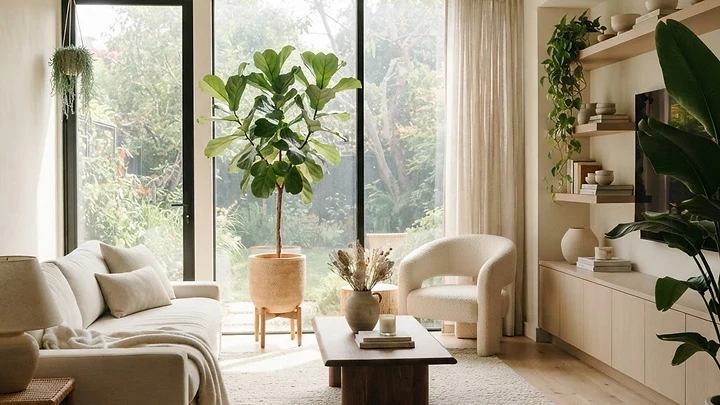
The honesty of natural materials
Natural materials have a quality that synthetic materials cannot replicate: honesty. A piece of wood tells the truth about where it came from. You can see the grain, the knots, the growth rings. A piece of stone shows its veins and fossils. A piece of linen has the texture of the flax it was made from. These materials do not pretend to be something else. They are what they are, and that authenticity is what makes them beautiful.
In a world of synthetic surfaces that mimic wood, stone, and fabric without being any of them, natural materials stand out. They have depth, variation, and imperfection that synthetic materials lack. They age, developing a patina that makes them more beautiful over time. And they create a healthier indoor environment, free from the volatile organic compounds that synthetic materials release.
Wood: warmth and life
Wood is the most versatile natural material and the most warm. It can be used for floors, walls, furniture, and details. It comes in a range of tones, from the pale cream of maple to the rich brown of walnut. It can be left natural or finished with oil or wax that enhances its grain.
Choose solid wood over veneer or laminate when possible. Solid wood can be refinished, repaired, and repurposed, while veneer and laminate cannot. Teak, oak, and acacia are excellent choices for Indian climates, as they handle humidity and heat well. Let the wood's natural variation show. A table with grain, knots, and colour variation is more beautiful than one that has been made to look uniform.
Stone: cool and permanent
Stone brings a cool, grounded quality to a space. It is the most permanent of materials, lasting for centuries without degrading. Use stone for countertops, floors, and features. Sandstone, limestone, and marble are all beautiful choices for Indian interiors, and they stay cool underfoot in the heat.
Stone has natural variation that is its greatest beauty. No two pieces are the same. The veins in marble, the fossils in limestone, the ripples in sandstone. These are the fingerprints of the earth, and they make each stone surface unique. Choose stone that is locally sourced when possible, to reduce the environmental cost of transport and to connect the space to its region.
Linen, cork, and clay
Linen is the most beautiful natural fabric, with a texture that improves with age and washing. Use it for curtains, cushions, and bedding. It breathes, regulates temperature, and feels better the more it is used. Linen in warm, natural tones creates a softness that balances the hardness of wood and stone.
Cork is a sustainable, warm, and tactile material that is underused in interiors. Use it for wall panels, pin boards, and flooring. It is soft, insulating, and has a unique texture that invites touch. Clay and terracotta bring an earthy, handmade quality. Use them for planters, tiles, and vessels. These materials, linen, cork, and clay, add the soft, tactile elements that complete a natural material palette, creating a space that is warm, grounded, and alive.
Keep exploring
Frequently asked questions
Stay close to nature
Letters on living with nature, occasionally in your inbox.



Come closer
Let us bring nature closer to your space.
Tell us about your home, your terrace, your office, and how you would like it to feel.