
You do not need a garden
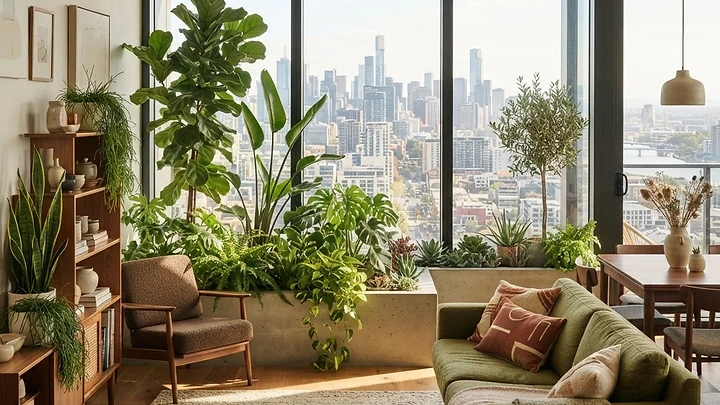
There is a belief that nature belongs in gardens, and that apartments are places where nature comes to die. This could not be more wrong. Some of the most beautiful, most alive spaces we have designed have been apartments, not because they had more space, but because they used the space they had with intention.
An apartment does not need a garden to feel green. It needs the right plants in the right places, chosen for how they will be lived with. A single plant on a windowsill, a cluster on a shelf, a small tree in a bright corner. These are not compromises. They are choices, and they can transform a flat into a home that feels alive.
The goal is not to fill the apartment with plants. It is to place plants where they change how the space feels. Sometimes that means one plant. Sometimes it means ten. The number matters less than the placement.
Start with three plants
If you are new to indoor plants, do not start with twenty. Start with three. Choose three plants for three different spots, and learn to keep them alive before you add more. This is not a limitation. It is a foundation.
For a low-light corner, choose a snake plant or a ZZ plant. These tolerate neglect and dim light and will thrive in spots where other plants fail. For a bright window, choose a pothos or a peace lily. These love indirect light and reward care with visible growth. For a statement spot, a large empty corner that needs something, choose a rubber plant or an areca palm.
Three plants, three spots, three different conditions. If you can keep these three happy for a few months, you will have learned more about plant care than any guide can teach you. Then you can add more, with confidence.
Place plants where you look
The plants that matter most are the ones you see every day. A plant in a corner you never visit will be forgotten, and a forgotten plant is a dead plant. Place plants where your eye naturally falls, and they will become part of your daily life.
The windowsill above the kitchen sink is one of the best spots in any apartment. You stand there every day, and a plant there will be noticed, watered, and cared for without effort. The bedside table is another. A plant you see first thing in the morning changes how the day begins. The desk where you work, the shelf by the door, the bathroom window, these are the places where plants become part of the rhythm of living.
When a plant is in your line of sight, you notice when it needs water. You notice when it is growing. You notice when it looks beautiful. And that noticing is the relationship that keeps it alive.
Choose plants that thrive indoors
Apartments have specific conditions: limited natural light, dry air from air conditioning, and stable temperatures. The best apartment plants are ones that not only tolerate these conditions but thrive in them.
Snake plants are the ultimate apartment plant. They tolerate low light, need water only when the soil is completely dry, and grow slowly enough that they rarely outgrow their space. ZZ plants are equally forgiving, with glossy leaves that look good in any light. Pothos trails beautifully from shelves and can grow in water or soil.
For brighter apartments, consider areca palms for a tropical feel, peace lilies for flowers and air purification, or a fiddle leaf fig for a statement. All of these are well-suited to Indian apartment conditions and are widely available. Choose plants that fit your light, not just your aesthetic, and they will thrive with minimal effort.
Let plants change the way you live
The real impact of plants in an apartment is not visual. It is emotional. A room with living things in it feels different from a room without. It feels cared for. It feels alive. It feels like a place where someone is present, not just passing through.
When you wake up and the first thing you see is a plant catching the morning light, the day starts differently. When you come home and the last thing you see is green, the evening ends differently. These are small shifts, but they accumulate. Over time, a home with plants becomes a home that feels more restful, more connected, and more like a place you want to be.
You do not need a garden to live among nature. You need a few plants, placed with care, and the willingness to notice them. That is enough. That is everything.
Keep exploring
Frequently asked questions
Stay close to nature
Letters on living with nature, occasionally in your inbox.


Come closer
Let us bring nature closer to your space.
Tell us about your home, your terrace, your office, and how you would like it to feel.