
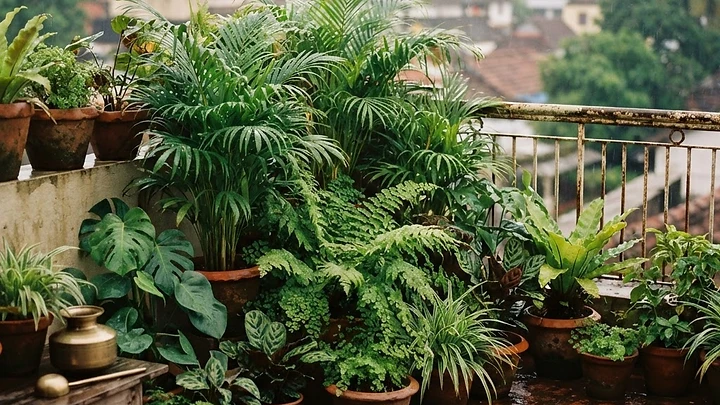
Built for the heat
Succulents are the plants most perfectly suited to Indian conditions. They evolved in arid environments, storing water in their leaves and stems to survive long periods of drought. They handle heat, tolerate neglect, and come in an extraordinary range of forms. For Indian homes, they are the ideal low-maintenance plant.
The key to understanding succulents is understanding water. Every part of a succulent is designed to conserve it. The thick, fleshy leaves are water reservoirs. The waxy coating reduces evaporation. The shallow root system captures water quickly before it drains away. When you understand this, you understand why overwatering is the worst thing you can do to a succulent.
The best varieties for India
Jade plants are the classic succulent, with their tree-like form and thick, oval leaves. They are almost indestructible, tolerate indoor and outdoor conditions, and can live for decades. Aloe vera is both ornamental and useful, with its gel-filled leaves that soothe burns and skin irritation.
Echeveria forms beautiful rosettes and comes in colours ranging from green to blue to pink. Haworthia is a compact succulent with striking, patterned leaves that stays small and is perfect for desks and shelves. Sedum and kalanchoe offer trailing and flowering options. All of these are readily available in Indian nurseries and online.
Care and watering
The golden rule of succulent care is to water less than you think. The soil should dry completely between waterings. In Indian summer, this might mean every 7 to 10 days. In winter, every 2 to 3 weeks. When you water, water deeply until it drains from the bottom, then let the soil dry again. Never let a succulent sit in water.
Use a well-draining soil mix. A cactus mix or a blend of regular potting soil with sand and perlite works well. Ensure pots have drainage holes. Place succulents in bright light, ideally with some direct sun. Indoors, a south or west-facing window is best. Succulents that do not get enough light will stretch and lose their compact form.
Propagation
Succulents are among the easiest plants to propagate. Many succulents can be grown from a single leaf. Gently twist a leaf from the stem, let it dry for a few days, and place it on soil. Within weeks, tiny roots and a new plantlet will emerge from the base of the leaf.
Stem cuttings work equally well. Cut a stem, let it dry for a day or two to form a callus, and plant it in dry soil. Water lightly after a week. The success rate is high, and propagation is a satisfying way to expand your collection or share plants with friends. A single succulent can produce dozens of offspring over its lifetime.
Keep exploring
Frequently asked questions
Stay close to nature
Letters on living with nature, occasionally in your inbox.



Come closer
Let us bring nature closer to your space.
Tell us about your home, your terrace, your office, and how you would like it to feel.